Crawl space mold remediation addresses the biological contamination that develops beneath residential living areas when crawl space relative humidity stays above 70% for prolonged intervals. In Columbia, high summer…
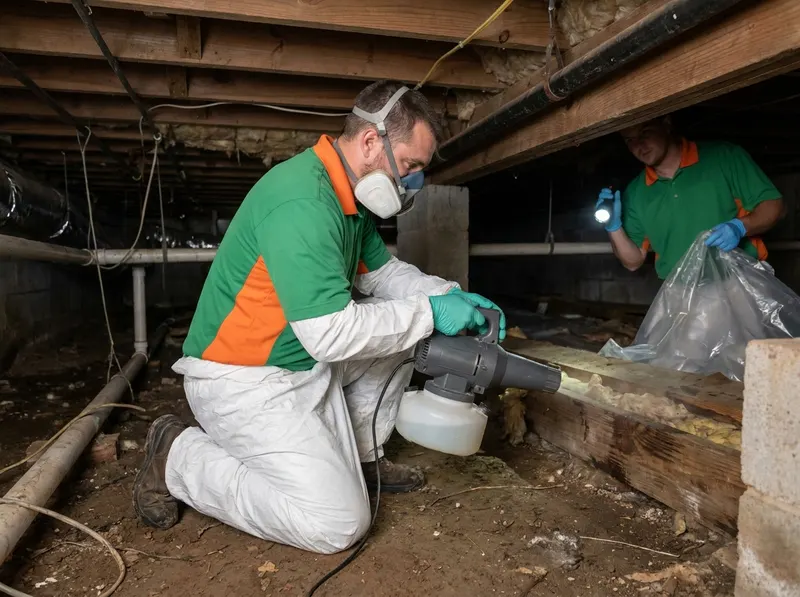
Crawl space mold remediation addresses the biological contamination that develops beneath residential living areas when crawl space relative humidity stays above 70% for prolonged intervals. In Columbia, high summer dew points combined with moist river-basin air from the Congaree River and Columbia Canal drive crawl space wood-moisture levels well above the 19% threshold required for wood-decay fungi and mold species like Cladosporium and Penicillium to multiply. Historic raised-foundation structures in Cottontown, Earlewood, and Elmwood Park frequently experience the stack effect, in which warm air rising through upper stories pulls up to 50% of the home's breathing air straight from the crawl space. This natural airflow introduces active mycotoxins, fungal spores, and damp musty odors into living areas, triggering indoor respiratory issues without a visible plumbing leak inside the home.
Selecting localized antimicrobial treatment versus full encapsulation depends entirely on subfloor wood-moisture measurements and structural layout. For properties in Shandon, Rosewood, and Old Shandon with isolated seasonal fungal spotting and wood-moisture levels between 16% and 20%, physical wire-brushing, HEPA air-scrubbing, and an application of low-toxicity botanical or quaternary ammonium fungicides resolve the active growth. When persistent ground water intrusion or uninsulated soil elevates crawl space moisture beyond 25%, a common scenario near the low-lying creeks of Lake Katherine and Forest Acres, surface treatments alone leave the wood vulnerable to re-infection. Complete remediation in those instances requires removing water-logged fiberglass insulation, installing a minimum 12-mil reinforced polyethylene vapor retarder along the soil, and installing a dedicated commercial dehumidifier to keep wood moisture below 15% permanently. The operational trade-off is mechanical ongoing electrical consumption against the recurrent cost of replacing mold-damaged subfloor framing and foundation sills.
The remediation process follows a clear four-step clinical workflow: 1. Containment barriers are placed over foundation vents and access hatches to prevent fungal spores from venting into ground-floor windows. 2. Technicians hand-scrape and HEPA-vacuum the exposed floor joists, subfloor decking, and sill plates to capture surface mycelium. 3. Wood surfaces receive an EPA-registered fungicidal wash applied with low-pressure sprayers to eliminate hyphae embedded within the timber pores. 4. Dehumidification units operate continuously for 48 to 72 hours until wood-moisture meters confirm levels have dropped below 15% across all joist bays. Homes in tree-shaded lots throughout Heathwood benefit significantly from this structured moisture stabilization, protecting indoor air safety without saturating residential structures in lingering chemical odors.
Every job gets a firm, written price after a free on-site visit.
Tell us about your crawl space mold remediation job in Columbia and we'll send a clear, written quote, usually the same day.
 Orelvo Pest Care